

Menu

Services


Kidney Dialysis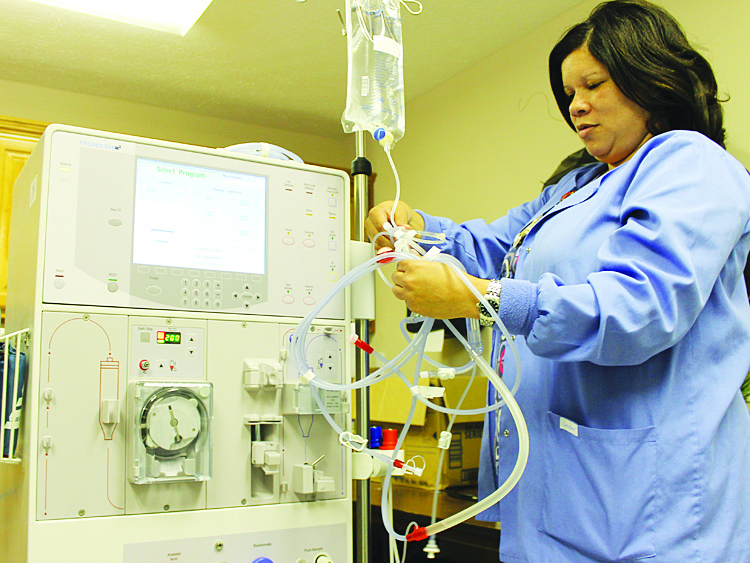
Jane Todd Crawford Hospital offers inpatient hemodialysis services for patients who meet appropriate medical criteria. Treatment is provided by a specialty trained nurse under the medical guidance of nephrologist Dr. Khalid Bhatti and Dr. Shafic El Hindi.
What is Kidney Dialysis?
Kidney dialysis is a treatment used when the kidneys are no longer able to adequately filter the blood on their own. Healthy kidneys remove waste products and excess fluid from the body while helping maintain the proper balance of minerals and electrolytes in the blood. When the kidneys are not functioning properly, waste and fluid can build up in the body. This may contribute to swelling, high blood pressure, shortness of breath, and other serious health problems. Dialysis helps perform many of the important functions normally handled by the kidneys.
Types of Dialysis
There are two primary types of dialysis:
-
Hemodialysis
-
Peritoneal Dialysis
How Does Hemodialysis Work?
During hemodialysis, blood travels from the body through a dialysis machine and dialyzer. The dialyzer removes waste products, excess salt, and extra fluid while helping regulate important substances in the blood, including potassium and sodium. The filtered blood is then safely returned to the body. Treatment time and frequency depend on the patient's individual condition and medical needs.
How does Peritoneal Dialysis Work?
During peritoneal dialysis, a special dialysis solution is placed into the abdominal cavity. The lining of the abdomen, called the peritoneum, acts as a natural filter to help remove waste and excess fluid from the blood. This type of dialysis may often be performed at home.
Who May Need Dialysis?
Dialysis may be necessary for patients with advanced or end-stage kidney disease when the kidneys can no longer adequately perform their normal functions. It may also be used temporarily for certain patients experiencing acute kidney injury or other medical conditions that significantly affect kidney function. For patients with permanent kidney failure, dialysis may be needed long term unless kidney function improves or the patient receives a successful kidney transplant. Dialysis does not cure kidney disease, but it can help replace important kidney functions, manage symptoms, and support a patient's overall health.
Executive Director of Dialysis: James Squires, RN